Monday, August 8, 2011
Beograd
We finished out visit in Pozeravac inc. a trip along the Danube to Golubac fortress and the Danube gorges at Derdap NP. Now in Belgrade to finish out the trip. Hot here so we are strolling around the picturesesque suburb of Zemun along the Sava river. Hope for internet cafe later for proper post!

Saturday, August 6, 2011
Milosevic Grave
Just a quick post - my brother-in-law's in-laws* live DIRECTLY across the street from the compound of the Milosevic clan. In fact, Slobodan is buried right across the street from where I type this post. I could throw a stone and hit the gate. Pretty crazy. There is nothing marking the home or the grave for outsiders at all at least.
*My wife's brother's wife's parents, which make them nothing to me other than good hosts.
*My wife's brother's wife's parents, which make them nothing to me other than good hosts.
Tuesday, August 2, 2011
Novi Sad

Vojvodina is a semi-autonomous region in northern Serbia, known for its ethnic diversity (Hungarians, Slovaks, Croats, Vlachs, Roma and of course Serbs populate the region). The capital is Novi Sad, is set on the Danube, overlooked by a stone fort on the opposite shore of the river. Vojvodina is rather flat, and the town is full of cyclists and bike paths, and on my impression was notable for its cleanliness and the obvious attention of politicians to urban landscaping, such as flower beds in public spaces, a well-kept public beach and an under-construction parallel series of pedestrian, cycling and jogging trails along the river.
 It also has great architecture and of course a large, pedestrian only area in the center of town full of shops, bars and cafes to entertain the locals and visitors. It is also only lightly touristed, which is hard to understand but helps keep the place very pleasant, even in July.
Also, as I mentioned earlier, Serbia right now (even moreso than Bosnia or Croatia) is bursting with wildly-inexpensive, largely organic, insanely delicious fruits and vegetables, especially tomatoes, peaches, apples, plums, pears and apricots. Definitely a highlight of the trip thus far.
One last point of interest in Vojvodina is the relics of the now-essentially-gone Jewish community (Albert Einstein used to live here; his first wife was from Novi Sad, although she was not Jewish.) Fortunately, Novi Sad has turned the tremendous old synagogue into a performing arts center, so at least this landmark remains in use and relevant.

Monday, August 1, 2011
Ostrog in Perspective
 I uploaded a photo earlier from Ostrog Monastery in Montenegro, and did a quick summary, but I wanted to spend a full post on this very special spot.
After leaving the shores of Lake Skadar on an early morning bus, we ended up in Podgorica (the capital of Crna Gora was formerly honored with the title of ˝Titograd˝ before the destruction of Yugoslavia). From there we grabbed a bus to the turnoff, and a completely insane Montenegrin man shared the taxi ride up with us. He sat in the front seat, and asked to play the driver's CDs. Upon finding one he liked, he asked if he could borrow it. The taxi driver asked how he would get in back. He did not know. He then insisted that we stop en route for a coffee and a cigarette. The driver reluctantly agreed. So the rider asked the driver if he had a cigarette to give him. When we stopped for coffee, he invited us to sit with him, where he went on and on about how much he liked Mike Tyson, and thought that Puerto Rico was the the most beautiful city in the United States (the city of Puerto Rico is near New Jersey, no?). He also might be the only person in the Balkans who loves George W. Bush. (I was oblivious to all this of course, thank goodness for my wife the translator.)
 Anyway, despite the madman, Ostrog is an amazing sight. If you stare closely at the photo at right (if you click on it, it will open more large in its own window), you can see a small white spot in the center of the photo. I hope that gives the reader an impression of the remoteness of the place. The interior of the rooms are mostly caves on three sides, enclosed by the outer wall that is visible from the outside. It is largely a spot for the pious, although I found it strange that several of the pilgrims came in uncovered shoulders and shorts, despite signs asking otherwise.
On the ride down, much to our tax driver's relief, the Mrs. and I descended without the madman. When we passed him walking down the road, we slumped in our seats as our driver shifted gears to quickly pass him. And, as mentioned, the car made it down but was put our of commission by our trip.
* * *
Side note: Lonely Planet, the largest travel guide company in the world, and sometimes sadly/absurdly referred to as ¨the bible¨ by travelers, shamefully fails to explain how to visit Ostrog independently. Shame on you, LP. Anyway, if you have stumbled upon this blog post curious, here is Ostrog by public transport: Go to the bus station in Podgorica, buy a ticket on a Nikšić-bound bus to the spot on the side of the highway where the turnoff is to Ostrog (if they do not speak English, you should still be able to communicate this, and despite what you may have heard the bus stations have departure and arrival information in Latin characters.) The ticket will say Bogetici but there is no town there, just a tiny gravel car park with a few taxis. Keep an eye on the signs on the side of the road and remind the bus attendant where you are going. We paid 12 euro for the car to go up, and the same price to go back but considering the condition of the road, a fair price. Not cheap obviously though so hitchhiking or a group tour may be more economical if you do not have a group. You should be able to pay the driver for the round trip at the end of the ride. This same thing can be done from Nikšić if you are coming from Žabljak or other points north.
Šaran Eight/Take a Break/You Can Reach Your Destination
 Constructing a railway from the Yugoslav capital, Belgrade, to the Bosnian city of Sarajevo was an important way to link together the young Kingdom of Yugoslavia. However, the mountainous terrain between these two cities created an engineering challenge for the government. Through a series of tunnels and switchbacks, a narrow-gauge railway was constructed climbing hundreds of meters to solve this challenge.
 In 1974, the then unprofitable line ran its last train, until locals on the Serbian side decided to revive the line in the late 1990s (amidst the chaos of the Miloševič years). Today, a charming tourist train, called the Šargan Eight and rebuilt to early 20th century standards, runs this portion of the historic track, with plans to extend it all the way back into Bosnia. It is a great way to enjoy the green mountains of Serbia's Zlatibor region.

(But it's still a ways away...)
* * *
 Nearby is an artist colony/˝etno-village˝ that also has some nice views of the area, which made for a nice walk up a mountain while we waited for the train to depart. We were also filmed by several Japanese guys with fancy camera equipment at one of those touristy photo-op placards where you put your head inside. Perhaps we are big in Japan.
Another Communist-Era Hotel
 This one is the Hotel Zlatibor in Užice (OO-zheet-seh). Notable for its views, it's greyness, it's scary, dark lobby, it's terrifying, tiny elevator, and the flickering horror-movie lights in the hallways. It towers over the town's *empty main square. The Hotel Vrbak it is not.

Friendly enough staff though, and the room was weird but well enough kept. Strange thing for a guy from a country a bit obsessed with safety is that on the 13th floor, there were no screens of anything else to keep one from jumping/falling out a window.
We were only spending the night in Užice as a jumping off point for the Šargan Eight railway in nearby Mokra Gora, so it did serve its purpose. I should have a post soon on the railway.
Nice view, though, as I mentioned.

*In Yugoslav times, the town was known as Titova Užice, and the main square contained a statue commemorating the Partizan victory over Fascism. In fact, in 1941, Tito's partizans drove the Nazis out of Užice for several months while residents lived in the ill-fated Užice Republic until the Germans again regained control. Unfortunately, while the square is still named for the heroic Partizans, the statute of Tito has been removed with nothing left to replace it to honor this historic and heroic event.
Friday, July 29, 2011
Photos of the More Original Variety

A street-car named Strawberry

A working telephone from the home of my late grandmother-in-law

Kayakers off Dubrovnik
Plitvice Lakes
 After a greuling overnight bus ride on a minibus built for the cast of Time Bandits, we arrived early yesterday morning in the Croatian capital of Zagreb. We had enough time to briefly have coffee with another former Zivinive resident, a friend of the Mrs. who has also kindly offered to host us here in Zagreb. We were then back on a bus for a day trip to Plitvice National Park in Croatia. A lovely spot, if a bit overrun by tourists. I will try to upload a personal photo later but this should give you the idea.
We had a relaxing night with our hosts, and are now preparing to see the sights in Zagreb. It looks to be a lovely day here.
Thursday, July 28, 2011
Hotel Vrbak

The Hotel Vrbak
 It is really hard to put into words the architectural wonder of Novi Pazar's Hotel Vrbak. To me, it is as if toward the end of the 18th century, a group of Ottoman architects were taken by a time-traveling spaceship to the latter part of the 1970s, then told to use that experience to design a hotel. Over the top (literally as it spans a small river), grand, detailed, and right in the center of town, it is also a tad run down, rather empty, and like much of this part of the world, a bit vandalized with graffiti; it was a real treat to spend a night there. Laurence Mitchell, the author of the extremely well-written Bradt guide to Serbia, described it like this:
 ¨however much communist-period architects were under instruction to provide cheap, utilitarian housing for the proletariat, they were given completely free reign when it came to the design of hotels...a wacky architectural conceit that was taken seriously by a planning committee and immortalised in concrete -- a curious combination of retro-Ottoman and modernism.¨
The interior room decoration are consistent with the outside, too. Hexagons abound, with arch-like details and wrought-iron window treatments.


In a landscape with far too many post-war cities full of grey apartment blocks (really, communism is over, why don't the residents throw a coat of paint on these exterior walls?), the Hotel Vrbak is an impressive and unique sight.
(If you have further interest, please click on the official website for more photos.)
Crkva Petrova

The Oldest Church in Serbia (Saint Peter or Crkva Petrova) lies just 3 kilometers from central Novi Pazar. It's old gravestones and green, hill side location is evocative of old Celtic churches in Ireland. It was here around a thousand years ago that Stefan Nemaja organized the council that outlawed the Bogomil heresey in Serbia (I have no idea what that means but it sure sounds important).

The church was locked, so the Mrs. asked a local if she knew where to find someone with the key. The woman, who was herding about a half dozen goats, said that she could tell her where to get it, then handed her her goatherder's staff, walked away, and told her to keep the goats off the church grounds. Needless to say, the Mrs. was not happy and unprepared to tend to goats, but after a few minutes the woman returned and gave us directions to a house to get the key. That house had a garden full of ripe plums that we were free to sample, and the attendant brought out an enormous, heavy, iron key to let us inside. After a look around, we walked back to busy, central Novi Pazar, without the goats.

Wednesday, July 27, 2011
Rounding Out
A quick summary - after spending nearly a week wrestling with the Bosnian authorities over paperwork for the Mrs., we grabbed a bus to Mostar (which lost its transmission en route, but was repaired by the driver and bus attendant on the side of the road and continued on to Mostar). We grabbed a local bus to Blagaj and spent the night in a restored, 18th century Ottoman house and visited the dervish house at the mouth of the river Buna. We then made a raid on the tourist stonghold of Mostar, grabbing a few photos of the new Old Bridge before a ¨bus trip¨ (really a bewildering car ride to a minibus) to Tebinje, in the part of Hercegovina known as Republika Srpska, where upon arrival my bag was missing from the minibus. After relaxing in Trebinje, we embarked on another guerrilla-style raid of another tourist-held town, Dubrovnik, Croatia, and before nightfall found quarters in Herceg Novi, Montenegro. The next afternoon we arrived in Kotor, at the end of a bay attached to the Adriatic, for a few days of kajaking and climbing the old walls of the town. Then it was off to the old Montenegro capital of Cetinje (Tse-tin-yeh) for some museums and sights, and a trip around the largest lake in the Balkans, Lake Skadar. From there we were on to Durmitor park, then some Crna Gora hospitality with family in Nikšić (where en route the tire blew out on our minibus, and our driver jumped in a car with no explanation, leaving us on the side of the road). We left Montenegro for Serbia, with a stop in Novi Pazar, in the largely Muslim Sanđak region, then a lot of buses to get to the mountains of Zlatibor and a ride on the Šargan Eight railway. We then spent four nights in Novi Sad, the capital of Serbia's Vojvodina region, with a visit to the largely-Hungarian town of Subotica and a hike in the rolling, fetile hills of Fruška Gora. We also made a day trip to Belgrade - where we will return again before we leave - and now find ourselves again visiting Živinice in NE Bosnia. Tonight we plan to get an overnight bus to Zagreb, then carry on for a day trip to Plitivice Lake National Park in Croatia, followed by spending the weekend poking around the Croatian capital.
Photos
Back in Živinice again, somewhat unexpectedly, but as a result of good news on the paperwork front. In the meantime, here are some photos of some stops along the way.

Blagaj

Bridge in Trebinje

Bay of Kotor and Kotor Town

Cetinje

River near Lake Skadar

Ostrog Monastery

Durmitor National Park
I plan to catch up over the next few days with more posts.

Blagaj

Bridge in Trebinje

Bay of Kotor and Kotor Town

Cetinje
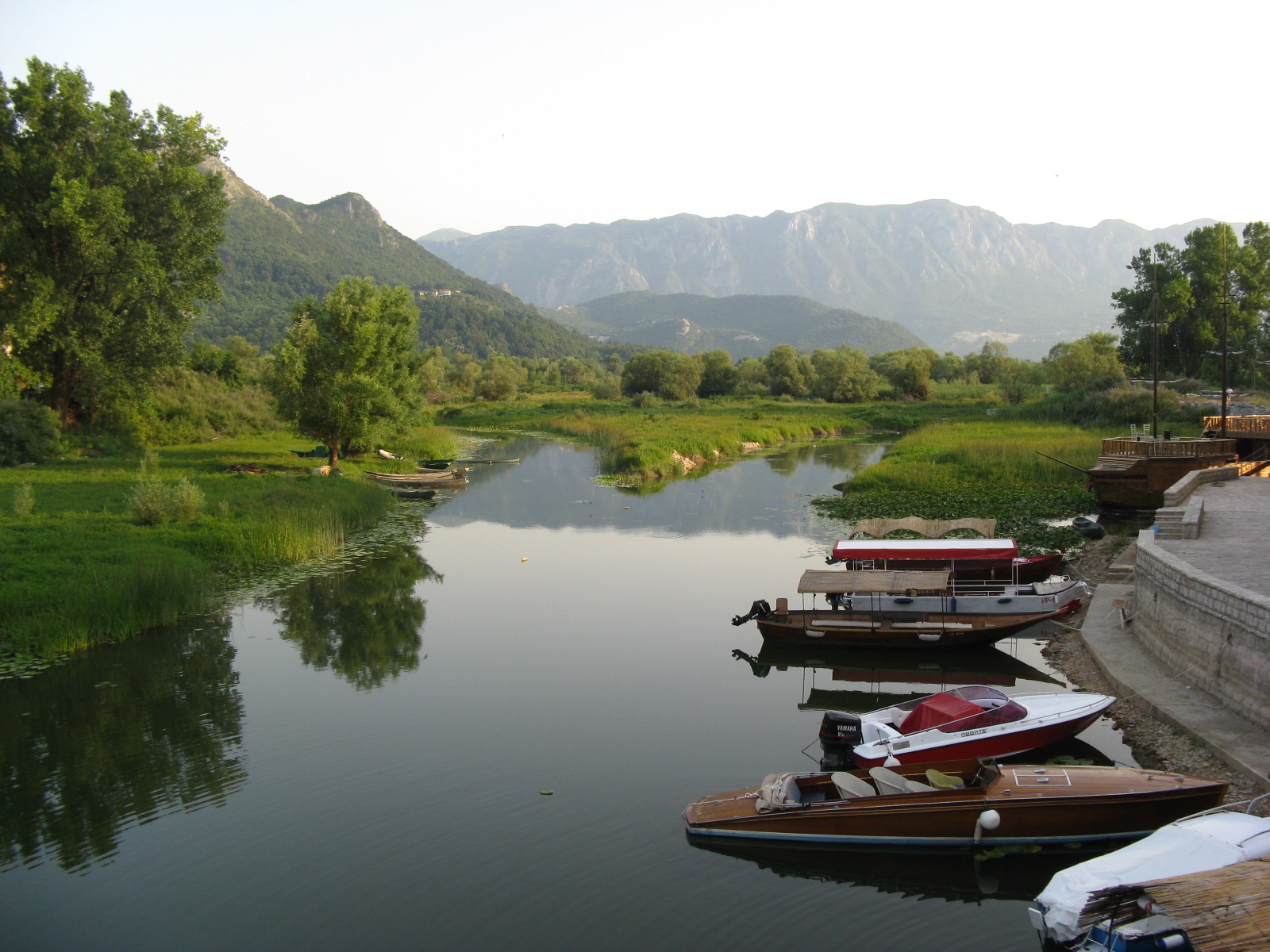
River near Lake Skadar

Ostrog Monastery

Durmitor National Park
I plan to catch up over the next few days with more posts.
Monday, July 25, 2011
ppd.
It is quite wet in Vojvodina today so the planned hike in the Fruska Gora hills was not to be. So we hopped on a bus to poke around Belgrade today for some museums. On the bus to the capital we discovered that on Mondays those museums are closed. The rain held off long enough to look around the mighty fortress at Kalemegdan at least. Hopefully tomorrow we get out to the hills.
Sunday, July 24, 2011
Novi Sad & Subotica
It has been easy to see why Novi Sad is one of Serbia's main tourist draws. Great buildings, a lovely setting on the Danube, and an imposing fortress overlooking it all. One noticable thing about NS after traveling the region is the obvious level of civic pride and attendant local government. There is little trash on the streets, public spaces have lovely flower beds, and the city is in the midst of constructing an expansive multipurpose trail along the Danube.
Yesterday we made a day trip to Subotica (Suh boe teet sah) a charming, largely Hungarian town near the Magyar border. It has an abundance of secessionist buildings but was very sleepy on a Sunday morning. We ate an absurdly large, tasty and inexpensive Hungarian meal topped off with a remarkable apricot rakija, which seemed to linger with fruit for a full minute after each sip. And we did manage to pick up some paprika and a few souveniers as well.
Yesterday we made a day trip to Subotica (Suh boe teet sah) a charming, largely Hungarian town near the Magyar border. It has an abundance of secessionist buildings but was very sleepy on a Sunday morning. We ate an absurdly large, tasty and inexpensive Hungarian meal topped off with a remarkable apricot rakija, which seemed to linger with fruit for a full minute after each sip. And we did manage to pick up some paprika and a few souveniers as well.
Saturday, July 23, 2011
Novi Pazar and Shargan 8
We really enjoyed the Ottoman charm and creative modern architecture of Novi Pazar and then stopped off for a trip on the historical Shargan Eight railroad (cue REM). Now in Novi Sad and hope for a proper post later today.
Tuesday, July 19, 2011
Onward to Serbia
We have had a great few days relaxing in Niksic but now we are headed on this morning to Novi Pazar in Serbia. I'll try to update again when we are there.
Nikšić (Back in Real Time)

After wondering at the beauty of Durmitor National Park here in Montenegro, we decided to pay a visit to the Mrs family in Nikšić (Nik-shich). Nikšić is famous for two things - the hometown of my father-in-law as well as Nikšicko Pivo, a tasty and popular beer throughout Southeastern Europe. Interestingly, we are visiting the family of my wife's father's cousin, who she hasn't met since she was five, yet the Montenegrin hospitality was in full effect as our hosts treated us to a lovely meal and company last night. Unfortunately, the grandmother here in Nikšić passed away earlier this year, but we are staying in her apartment while we rest up, visit with family, and do some laundry. Nikšić does not have any notable tourist sights per se, but it is a pleasant place, nestled in the mountains, with a lively pedestrian promenade.
* * * * * *
Perhaps most interesting of this stop is that one of our hosts here climbed Mount Everest in 1996. I've never met someone who has been on the mountain, but he regrettably had to turn back a mere forty meters from the summit. But even more interesting, he climbed down days before the famed 1996 Everest Disaster, spending his time at base camp with some of the eleven people killed. (The IMAX film of the event is very good as well.) A fascinating bit of history, and an unexpected but welcome experience.
Dubrovnik
Dubrovnik is a walled city on the Croatian coast, built by the Venetians and famed for its polished white-stone streets, churches, red-tiled roofed homes. It is lovely, absurdly expensive, with swarms of tourists and mediocre yet overpriced food. I have been to old walled cities from the Caribbean to North Africa, but never did one charge a person about 15 bucks to walk around the walls. Worst of it all, besides the people selling junk and uninspiring food, there are hardly any Croatians there. A worthwhile stop (and I mean stop, as we came in on a morning bus and left later than day for Herceg Novi in Montenegro), but if I could do it again I would have brought a lunch in to the Old Town and skipped the stops in the cafes for beer and coffee. 

Travel Woes
The taxi we took to Ostrog was put out of commission after we got out. The bus from Zivinice to Mostar lost its transmission half way there. And the left rear tire on the minibus back from Durmitor blew out en route. We are still here, but sometimes half the fun in the Balkans is getting there.
Subscribe to:
Posts (Atom)